
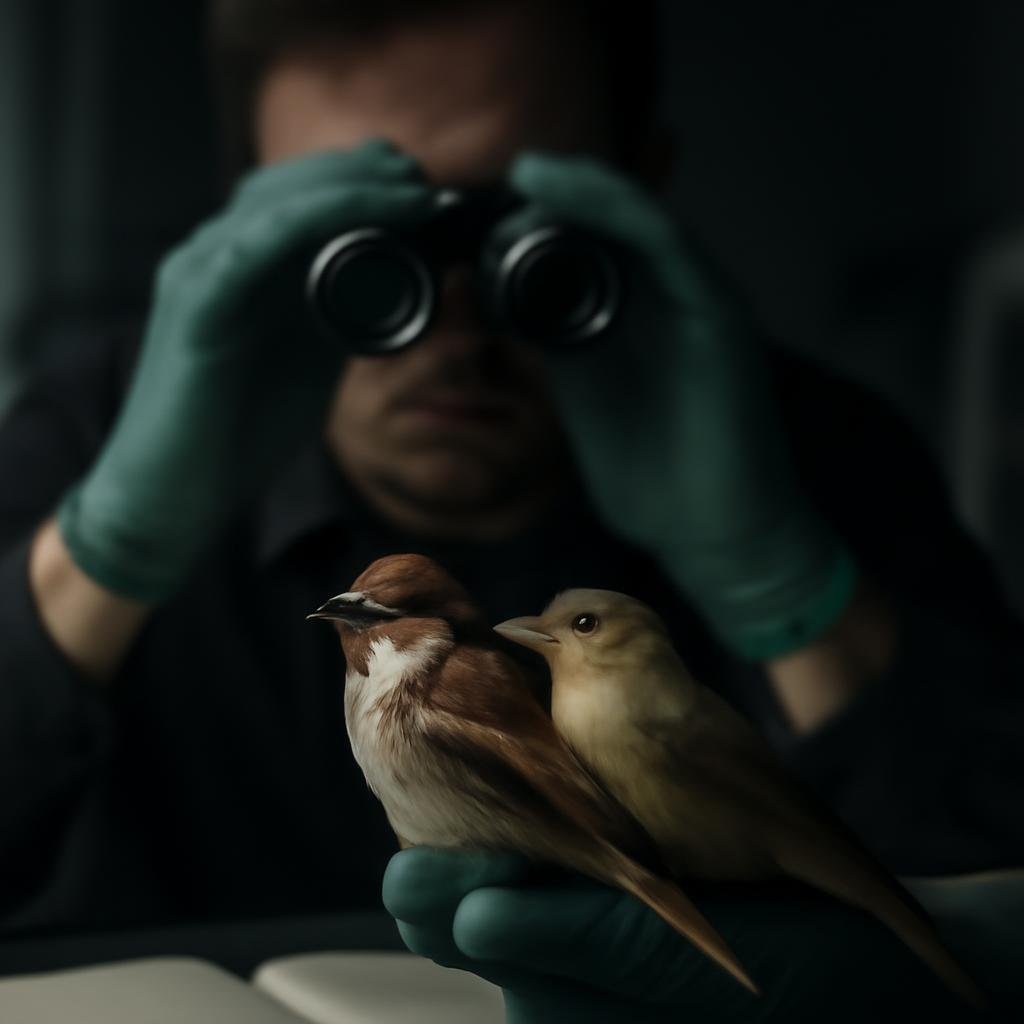
A recent study published on July 3, 2026, has unveiled intriguing insights into the mechanisms that limit hybridization among bird species. Contrary to the long-held belief that plumage color was a primary factor, researchers now suggest that vocalization, particularly the complexity of songs, is a crucial element in mate selection. This revelation stems from extensive observations of various bird species that utilize distinct vocal patterns to attract and recognize mates, proving that auditory signals might be more potent than visual cues in the world of avian reproductive strategies.
The research, documenting the mating behaviors of numerous bird species, emphasizes that song characteristics such as trills, whistles, and melodic notes significantly influence the likelihood of successful mating. These vocalizations serve as critical identifiers that help birds distinguish between their species and avoid interbreeding, which can dilute genetic integrity.
To validate these findings, scientists conducted a series of experiments involving playback of songs from different species to observe response patterns. The results were compelling; birds demonstrated a notable preference for familiar songs over visual cues like color or feather patterns. This indicates that auditory signals, intricately tied to evolutionary adaptations, might be fundamentally ingrained in how birds perceive reproductive compatibility.
This shift in understanding has profound implications not only for ornithology but also for conservation efforts, especially in areas where habitat overlaps among species are common. It suggests that maintaining specific song patterns could be essential for preserving species diversity in habitats where birds coexist. As researchers delve deeper, this new knowledge may lead to revised strategies for bird conservation, emphasizing the need for protecting not just physical habitats but also the intricate communication systems essential for avian survival.
In conclusion, the impact of songs in avian social dynamics unveils a complex layer of animal behavior that spans beyond mere aesthetic traits. Understanding these dynamics can help in creating more effective conservation strategies aimed at protecting various bird species from the risks of hybridization and genetic dilution.
For more insights on this fascinating study, refer to the article on Phys.org: Songs play a greater role than plumage color in limiting bird hybridization, study suggests.