
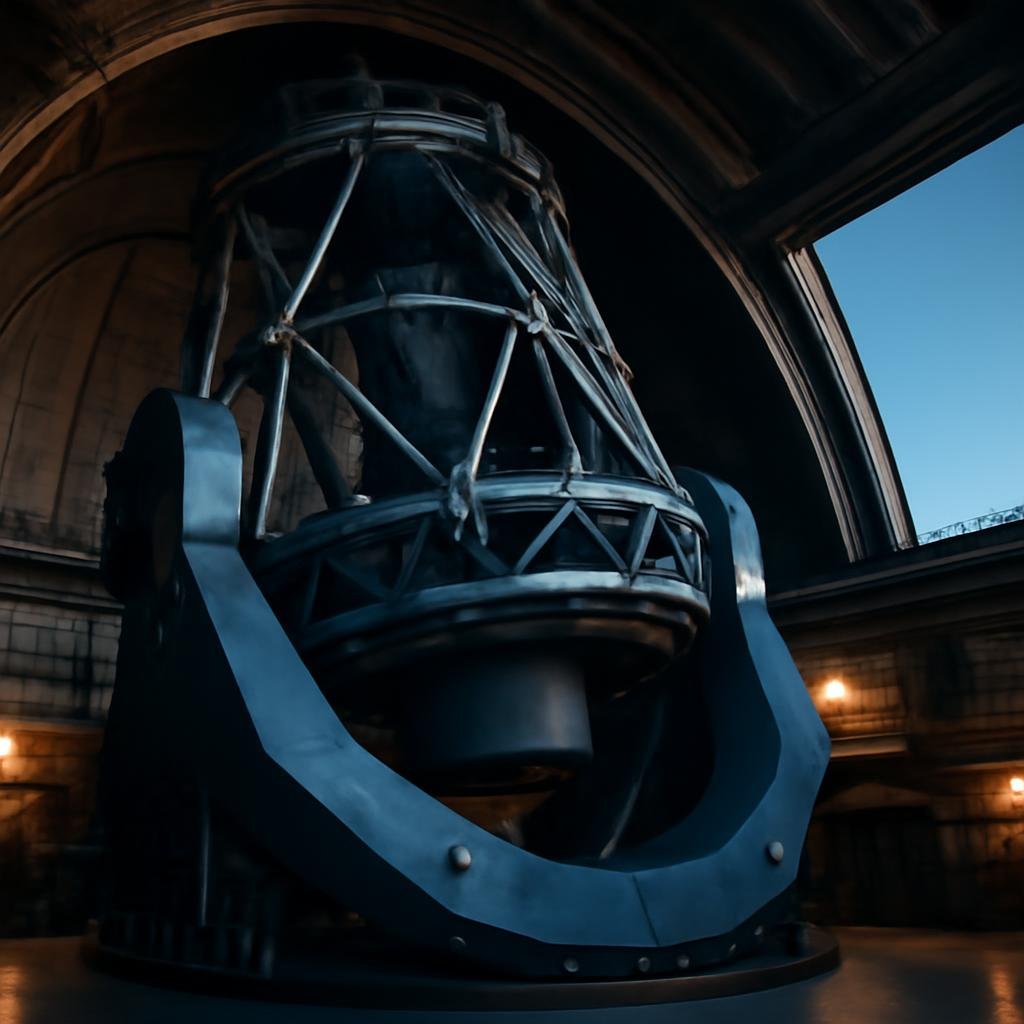
The Rubin Observatory marked a significant milestone on June 30, 2026, as it officially launched its 10-year campaign known as the Legacy Survey of Space and Time (LSST). This groundbreaking effort aims to systematically capture the night sky and is poised to map billions of celestial objects, including millions of asteroids. As part of the observatory's mission, researchers expect to unveil critical insights into enigmatic phenomena such as dark matter and dark energy.
The LSST is set to revolutionize our view of the universe by producing what has been dubbed 'the greatest cosmic movie ever made.' Utilizing advanced imaging techniques, the observatory will collect high-resolution data that encompasses a vast expanses of time and distance. This continuous monitoring will allow astronomers to not only catalog newly discovered asteroids but also improve predictions of their trajectories, significantly enhancing Earth's planetary defense mechanisms against potential impacts.
In collaboration with astronomers from the University of Washington, the initiative promises to analyze the distribution and characteristics of asteroids in unprecedented detail. The scale of this project is immense, with the potential to observationally validate theories surrounding the formation of the solar system and the dynamics of celestial bodies. Moreover, the LSST aims to provide essential data for the broader scientific community, who can utilize this wealth of information across various fields of research, such as planetary science and cosmology.
In addition to the asteroid mapping, the project aims to deepen our understanding of the universe by focusing on the properties of dark matter and dark energy, two of the most pivotal yet elusive components that constitute the cosmos. By utilizing state-of-the-art survey technology, the Rubin Observatory's findings could lead to breakthroughs in our fundamental comprehension of the universe and its origins.
With the LSST officially underway, astronomers are looking forward to a decade filled with discoveries that could reshape our cosmic narratives and influence the trajectory of future astronomical studies. The collaborative effort and the commitment of institutions and researchers worldwide are paving a path toward uncharted territories in space exploration and observation.