
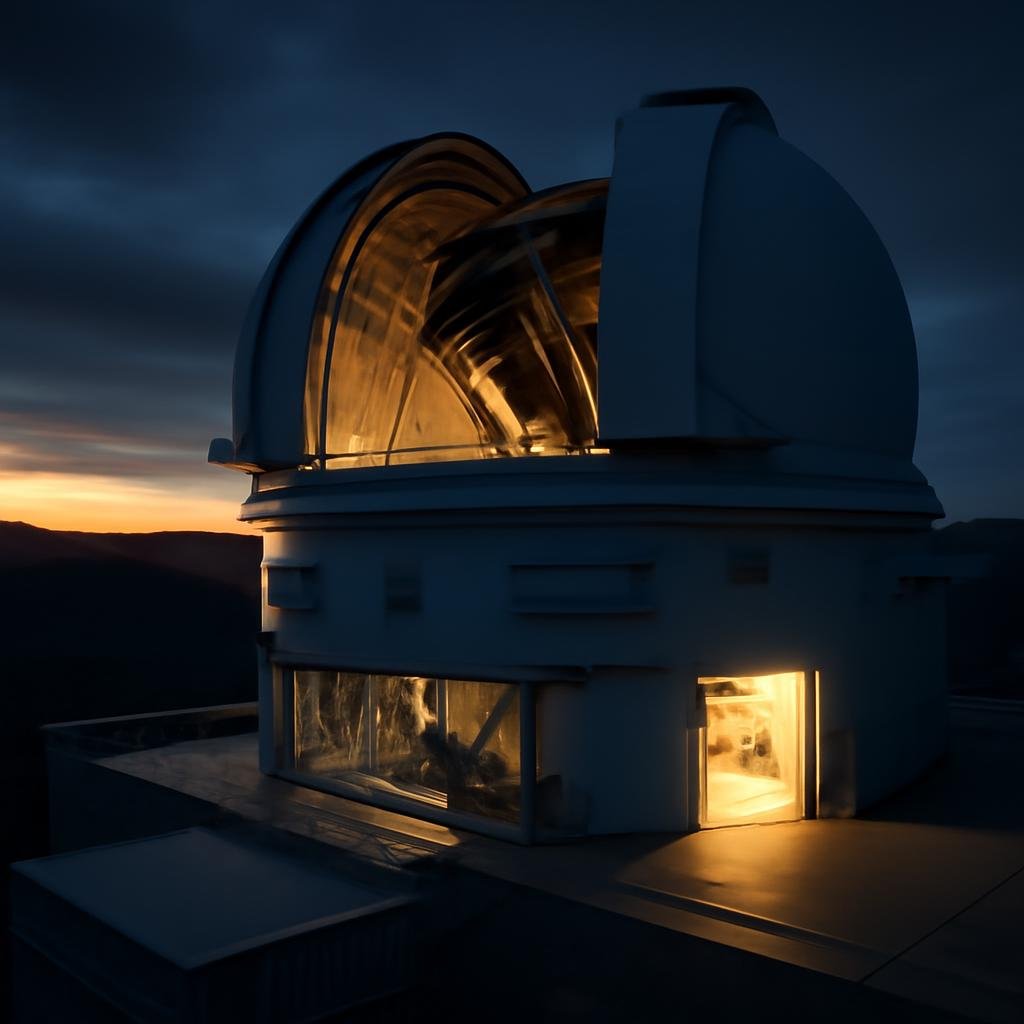
On June 30, 2026, the Rubin Observatory commenced a groundbreaking 10-year campaign known as the Legacy Survey of Space and Time (LSST). This ambitious project is designed to create what can be described as 'the greatest cosmic movie ever made,' detailing an expansive view of the universe that has the potential to transform our understanding of both the cosmos and its myriad components.
The LSST aims to capture detailed images of the sky, recording approximately 20 terabytes of data each night. The project's scope encompasses not only asteroids but also the elusive phenomena of dark matter and dark energy, which together make up around 95% of the universe. By systematically surveying the sky over a decade, astronomers anticipate identifying millions of asteroids, thereby providing invaluable data that could enhance our understanding of the solar system and beyond.
Interestingly, the project is bolstered by the involvement of astronomers from the University of Washington, who are contributing their expertise to analyze the vast data that this survey will generate. The telescope's unique design allows it to capture images of the same part of the sky multiple times, producing a time-lapse effect that will enable scientists to observe changes and movements of celestial objects with unprecedented clarity.
Moreover, the implications of the LSST extend beyond mere asteroid tracking. The continuous monitoring of the sky could lead to breakthroughs in our understanding of cosmic phenomena, such as supernovae and variable stars, and could elucidate the complex nature of dark energy and its influence on the universe's expansion. This endeavor not only highlights technological advancements in astrophysics but also reflects a significant step towards collaborative international research in the field of astronomy.
As this project unfolds over the coming decade, it promises to deliver a wealth of knowledge, potentially reshaping our conversation about the cosmos and our place within it. The resultant images and data will be crucial for both academic research and public engagement, making the wonders of the universe accessible to a broader audience.
In essence, the launch of the LSST marks a pivotal moment in astronomy, with an optimistic look towards its ability to illuminate some of the universe's most profound mysteries.
Was this article helpful?