
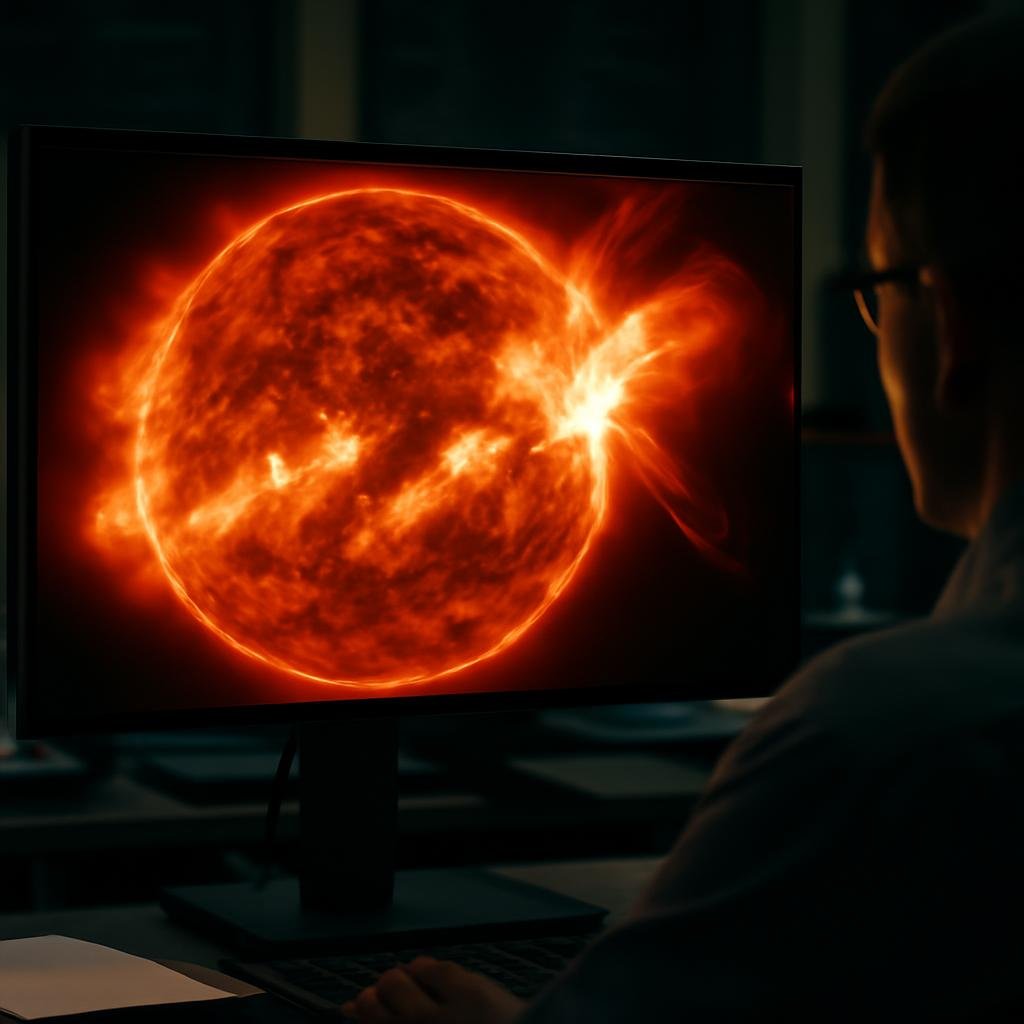
In a striking display of solar activity, the sun has released 10 M-class solar flares within just 24 hours, raising the possibility of breathtaking auroras across more than a dozen states in the United States this holiday weekend. This phenomenon, referred to as the 'machine-gun sun', has sparked excitement among both scientists and skywatchers alike as they prepare for a chance to witness natural light displays usually reserved for higher latitudes. The latest flares are part of an ongoing series of solar events and are likely to lead to additional eruptions in the coming days.
M-class flares are defined as medium-sized emissions of radiation from the sun's surface, and while they are not as powerful as X-class flares, which can disrupt satellite communications, they can still cause geomagnetic storms capable of illuminating the night sky. As these flares continue to erupt, experts are monitoring the situation closely, anticipating possible disruptions in the Earth's magnetic field. Such disturbances can lead to stunning auroras, typically seen in northern regions like Alaska and Canada but now potentially visible further south.
The arrival of these auroras is particularly timely, coinciding with Independence Day celebrations across the country. Skywatchers from states like Colorado, Iowa, and even northern Texas may get an unusual opportunity to see this natural light show, typically a rare occurrence for these areas. Scientists emphasize that forecasts for auroras can be tricky, contingent on various factors including solar wind speed and the Earth’s magnetic field orientation.
As the sun continues its cycle of activity, more flares and their effects are expected, showcasing the dynamic nature of solar behavior. Events like these serve as a reminder of the ongoing interplay between solar activity and Earth's atmospheric phenomena, providing interest not just for astrophysicists but for anyone captivated by the wonders of our solar system.
For those interested in catching a glimpse of these celestial displays, experts recommend staying tuned to local weather reports and aurora forecasts, as conditions can change rapidly.