
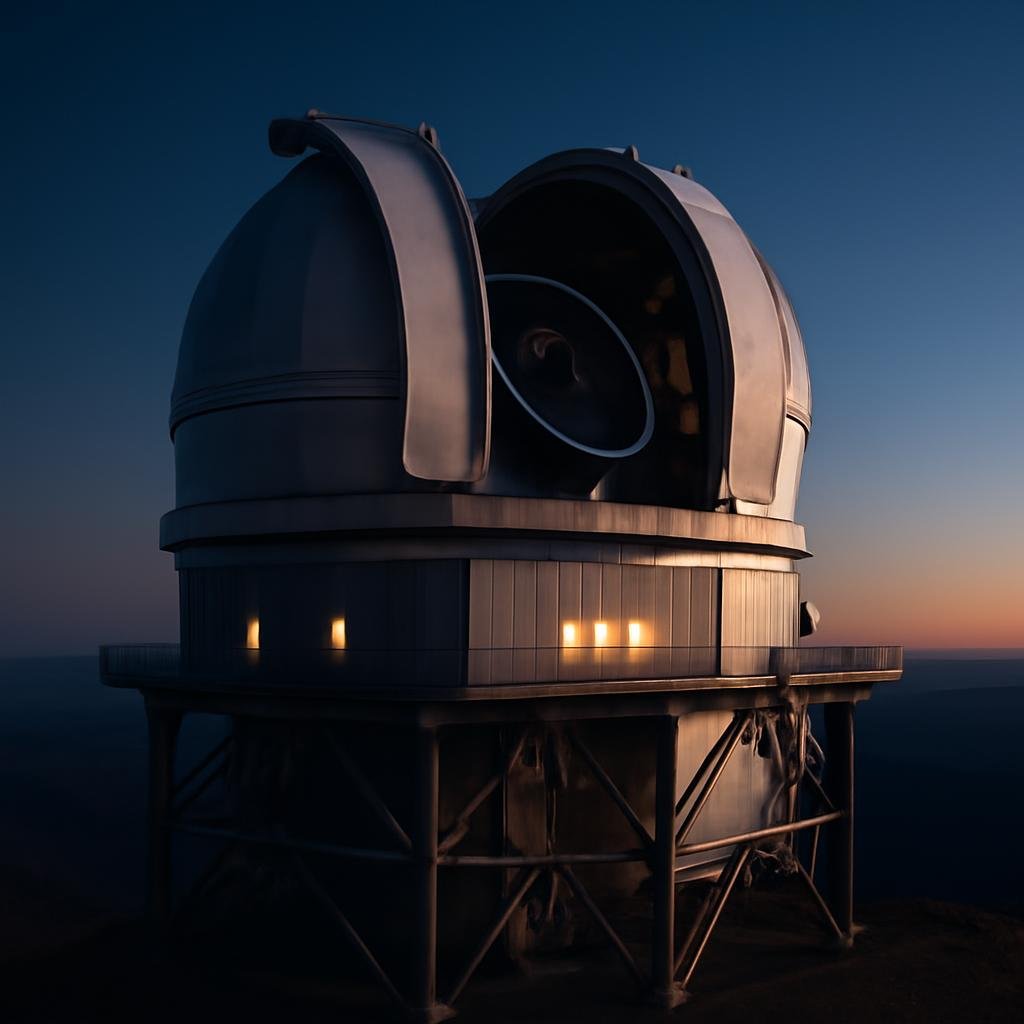
The Rubin Observatory has embarked on a monumental ten-year initiative known as the Legacy Survey of Space and Time (LSST), which is set to revolutionize our understanding of the cosmos. Officially launched on June 30, 2026, this groundbreaking survey aims to photograph the entire southern sky, producing an unprecedented catalog expected to include millions of asteroids and potentially significant insights into the enigmatic realms of dark matter and dark energy.
At the heart of this monumental project is a commitment to deploying advanced astronomical techniques and cutting-edge technology. The LSST will utilize an 8.4-meter telescope located in Chile, designed to collect huge amounts of data. Each night, it will capture images of millions of celestial objects, which astronomers plan to use for ongoing research over the next decade. One of the main objectives is to increase our understanding of the Solar System's dynamics, specifically targeting asteroids that could pose hazards to Earth.
This ambitious endeavor doesn't stop at asteroids alone; it also seeks to address some of the most pressing questions in modern astrophysics. By analyzing the distribution and behavior of dark matter and dark energy, scientists hope to shed light on the fundamental forces governing the universe. In support of this endeavor, astronomers from the University of Washington will collaborate closely with the Rubin Observatory team, ensuring that the vast array of data can be thoroughly analyzed and interpreted to glean valuable cosmological insights.
The significance of the LSST cannot be overstated. Previous astronomical surveys have provided critical observations of celestial phenomena, but the scale and scope of the LSST are unmatched. By providing a continuous feed of data over ten years, the project offers an extraordinary opportunity for astronomers and physicists to observe both transient events, like supernovae, and long-term changes in space, enhancing our overall comprehension of cosmic evolution.
Ultimately, as this project unfolds, it promises not only to enhance our knowledge of the universe but also to inspire future generations of scientists. The findings could influence numerous fields beyond astronomy, including planetary science and geology, as our understanding of celestial bodies deepens. As the Rubin Observatory continues this monumental task, the scientific community eagerly anticipates the groundbreaking discoveries that lie ahead.
For those interested in the intersection of technology and cosmic exploration, the LSST represents a landmark achievement in observational astronomy, driven by state-of-the-art technology and collaborative spirit.
Was this article helpful?