
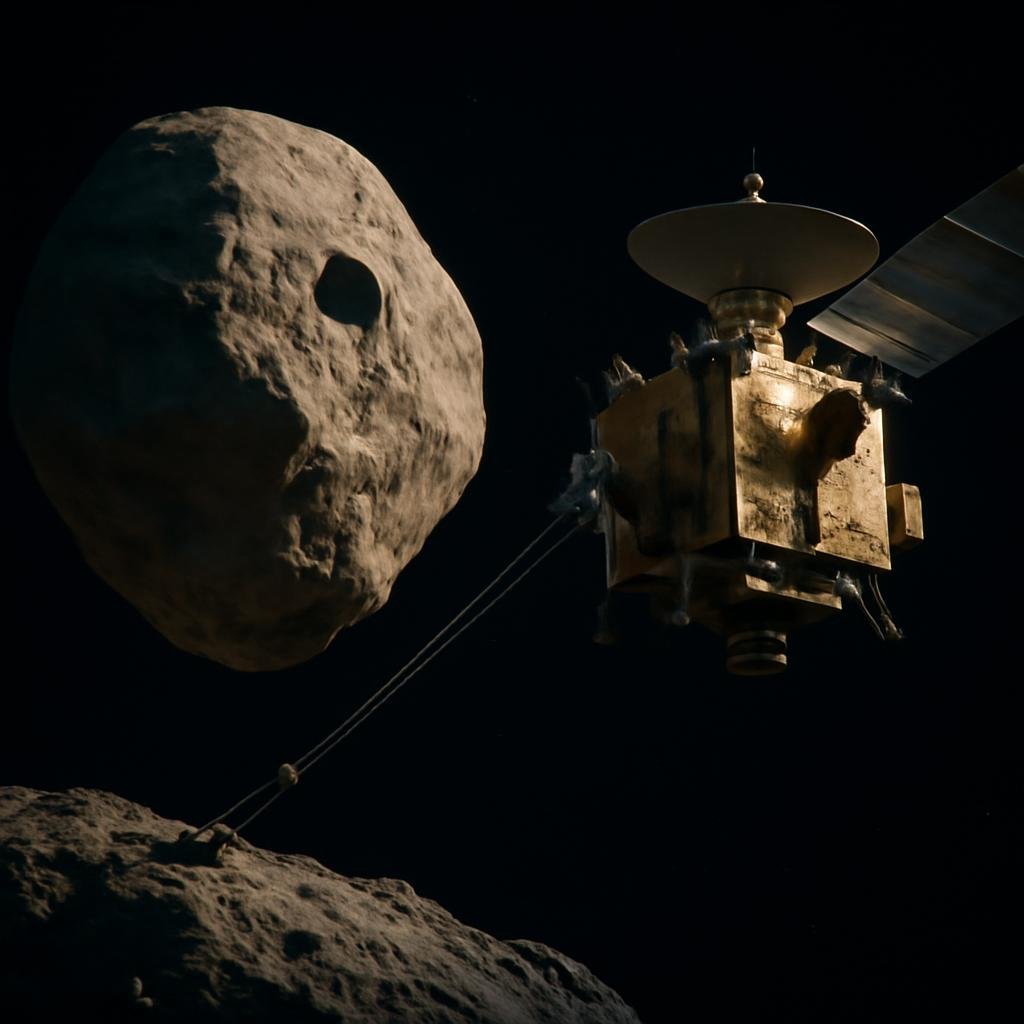
On July 6, 2026, the Chinese space agency announced that its Tianwen-2 space probe has successfully arrived at its target asteroid after an extensive mission spanning over a year and traveling 1 billion kilometers (620 million miles). This ambitious project aims to collect samples from the asteroid, which could provide invaluable insights into the early solar system and contribute to our understanding of planetary formation.
The Tianwen-2 mission represents a significant leap in China's space exploration capabilities. Launched over a year ago, it traveled through deep space, initiating complex maneuvers along the way. The primary objective of this probe is not only to rendezvous with the asteroid but also to conduct detailed analyses of its surface and gather material samples that will eventually be returned to Earth. The mission’s success could potentially bolster China's position in the international space community as a leader in space exploration and technological advancement.
In addition to enhancing scientific knowledge, the Tianwen-2 mission reflects China's continued commitment to expanding its capabilities in space research. With plans to return the samples by approximately 2028, this project will likely generate excitement in the scientific community, prompting a range of studies focused on the asteroid's composition, mineralogy, and the clues it may hold about the solar system's history.
This expedition is comparable to international efforts, such as NASA's OSIRIS-REx mission, which returned samples from the asteroid Bennu. It underscores a growing trend in both national and global efforts to explore near-Earth objects and understand their potential threats or resources. The successful completion of the Tianwen-2 mission could also initiate further missions aimed at exploring the vast expanse of our solar system, with the potential to reveal new wonders.
The arrival of Tianwen-2 at its asteroid target signifies not just a technical achievement, but also an opportunity for scientific inquiry that could lead to groundbreaking discoveries about the universe we inhabit.
Was this article helpful?