
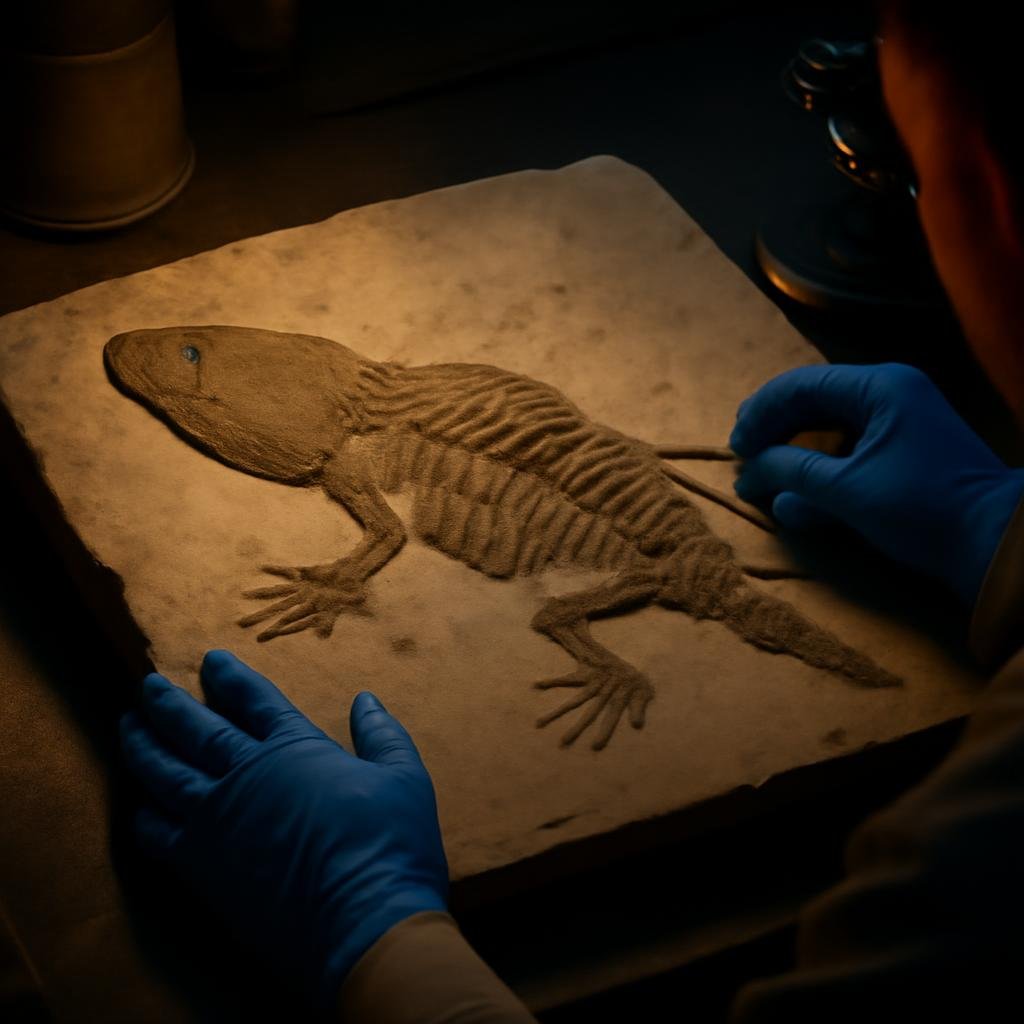
A groundbreaking discovery has emerged from the analysis of rare 309-million-year-old fossils that suggests early tetrapods—ancestors of modern land vertebrates—developed without the familiar tadpole phase previously thought essential in their evolution. This finding was detailed in a recent study published on July 5, 2026, which challenges long-standing assumptions in evolutionary biology regarding the transition of aquatic animals to terrestrial life.
Traditionally, scientists theorized that the first tetrapods, which made the leap from water to land, underwent metamorphosis similar to that of today's amphibians, beginning life as aquatic larvae before developing into adult forms equipped for life out of water. These new fossils, however, indicate a much different developmental path. They reveal that these ancient vertebrates may have bypassed this aquatic larval stage altogether, evolving directly into juvenile forms suited for terrestrial environments.
The implications of this study are significant as they offer a revised understanding of evolutionary processes and adaptations that enabled vertebrates to thrive in diverse habitats. The fossils, unearthed from a geological formation that dates back to when the Earth was undergoing extensive ecological transformations, provide a rare glimpse into the early adaptations that characterized life on land.
Furthermore, this research expands the timeline for understanding how and when vertebrates transitioned from aquatic to terrestrial ecosystems. Previous beliefs suggested certain features were necessary before making this critical leap, but these findings propose a more complex scenario where multiple evolutionary paths may lead to similar adaptations. The study highlights the intricate interplay of environmental factors and biological evolution during a pivotal era in Earth's history.
In conclusion, this discovery not only reshapes our understanding of early tetrapod development but also emphasizes the need for ongoing research in paleontology. The study opens avenues for further exploration into how ancient species adapted to survive in fluctuating environments and offers a fresh perspective on the evolutionary narrative of vertebrates.
Was this article helpful?