
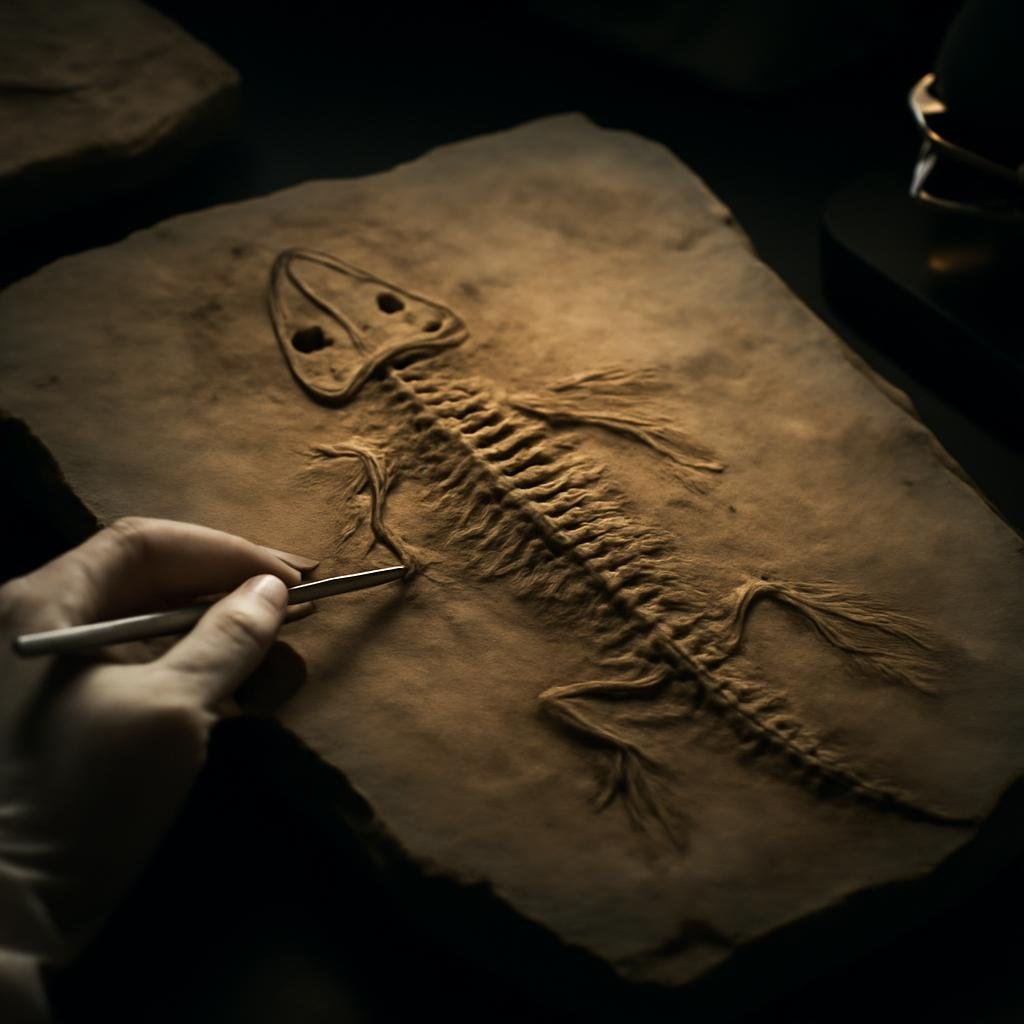
Scientists have made a significant discovery that may reshape our understanding of the evolution of early land vertebrates. A recent study published on July 5, 2026, detailed the findings of 309-million-year-old fossils that indicate early tetrapods, the first vertebrates to make the transition from water to land, may not have undergone a metamorphic tadpole stage, as previously thought. This revelation is critical because it highlights a distinct evolutionary path compared to what was assumed about these ancient creatures.
For years, researchers believed that the ancestral lineage responsible for the emergence of tetrapods mirrored the developmental process of modern-day amphibians, such as frogs, which hatch from eggs as aquatic tadpoles that later metamorphose into adults. This metamorphic phase was considered a necessary step in the evolutionary transition to terrestrial life. However, the new fossil evidence challenges this paradigm, suggesting that early tetrapods could have adapted to land environments in a single phase without such morphological changes akin to a tadpole stage.
The fossils, discovered in a sedimentary rock formation, offer an unprecedented glimpse into the anatomy of these ancient organisms, revealing features that are both distinctly amphibious and terrestrial. The absence of larval characteristics typically associated with tadpole development indicates a more direct route to terrestrial adaptation. This finding could compel scientists to reconsider how terrestrial vertebrates evolved, particularly regarding the roles of environmental pressures and biological adaptations in their journey onto land.
Not only does this discovery provide fresh insights into the evolutionary narrative of tetrapods, but it also raises questions about the ecological dynamics of their habitats during the Carboniferous period. Understanding how these creatures adapted to terrestrial life without a tadpole phase can shed light on the evolutionary strategies that allowed vertebrates to exploit new niches on land.
The implications of this research extend beyond paleontology, intersecting with fields such as developmental biology and evolutionary theory. It challenges existing models and encourages a reevaluation of how scientists conceptualize evolution and adaptation in response to environmental changes.
In conclusion, this groundbreaking discovery pushes the boundaries of our understanding of vertebrate evolution, urging scientists to look deeper into the ancestral traits of early tetrapods and the ecological contexts that influenced their development. As research continues, we could be on the cusp of reshaping key aspects of evolutionary biology.
Was this article helpful?