
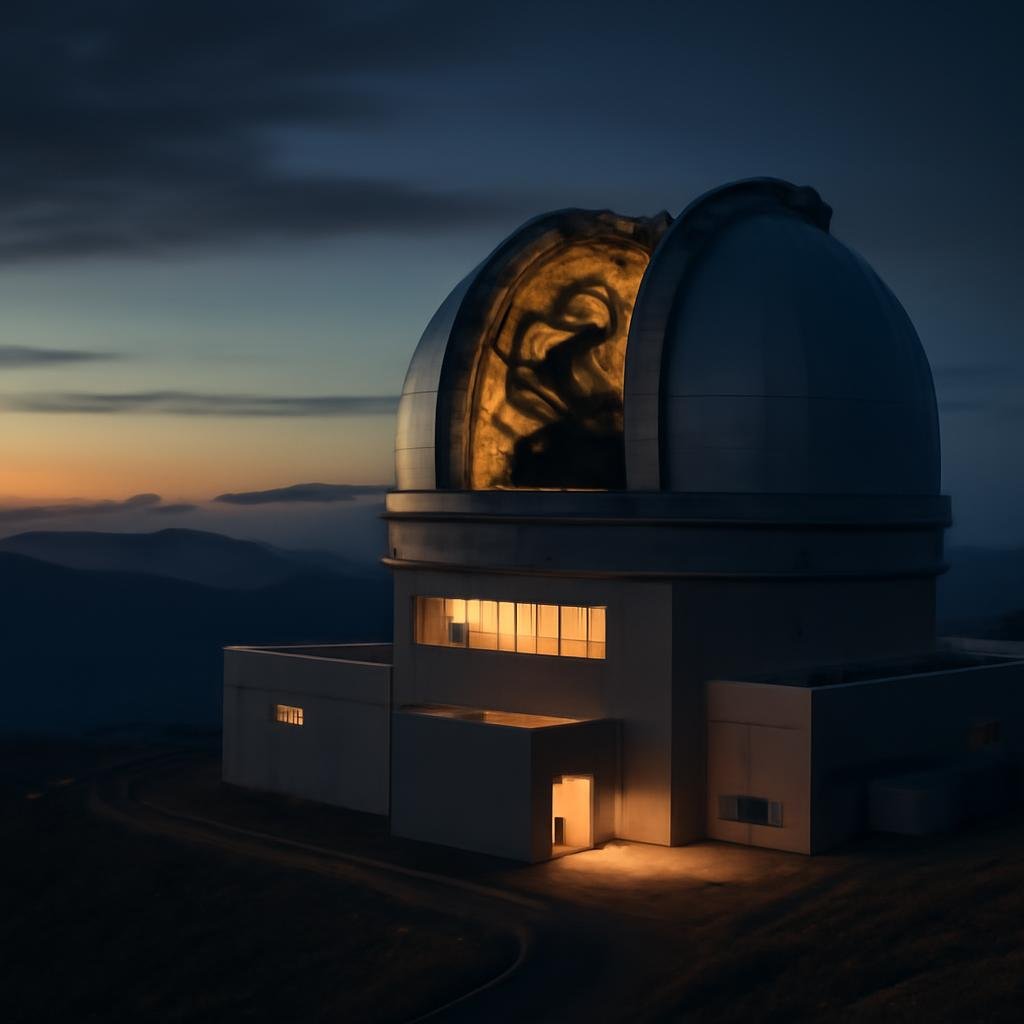
The Vera C. Rubin Observatory has officially launched its ambitious Legacy Survey of Space and Time (LSST), marking the beginning of a groundbreaking 10-year mission to observe the entire southern sky in unprecedented detail. This initiative, which Chief Scientist Tony Tyson describes as a potential game-changer for astronomy, aims to collect vast amounts of data that could profoundly enhance our understanding of the universe.
From its location in Chile, the observatory will utilize a state-of-the-art camera capable of capturing images with a total field of view that is larger than that of the moon, allowing scientists to gather detailed information not just about stars and galaxies, but also about transient phenomena such as supernovae and potentially dangerous asteroids. Each sky observation will be recorded multiple times, creating a time-lapse effect of cosmic events over the survey's duration, offering researchers an innovative way to study changes in the universe.
One of the most exciting aspects of the LSST is its potential to further explore dark matter and dark energy, two phenomena that remain elusive but are critical to our current understanding of cosmic evolution. By mapping the distribution of galaxies and tracking their movements, scientists hope to unveil clues regarding these mysterious components of the universe. Tyson noted, “It's more than a hope; it's a guarantee that this survey will blow our minds,” underscoring the confidence surrounding the project’s capability to deliver transformative insights.
Moreover, the LSST seeks to address the challenge posed by corporate satellites that may interfere with deep-sky observations. If these bright satellites proliferate as anticipated, they could obscure celestial bodies and complicate the survey's ambitious goals, making it imperative for astronomers to innovate in their techniques and technologies.
The Vera C. Rubin Observatory’s LSST is not just a step forward for astronomy, but also a significant leap in our collective quest to understand the universe. With the promise of groundbreaking discoveries on the horizon, its effects will likely be felt for generations to come.
For those interested in the latest developments in cosmic research and discovery, following the progress of the LSST could be invaluable. Stay tuned for updates on what could potentially reshape our understanding of the universe over the next decade.