
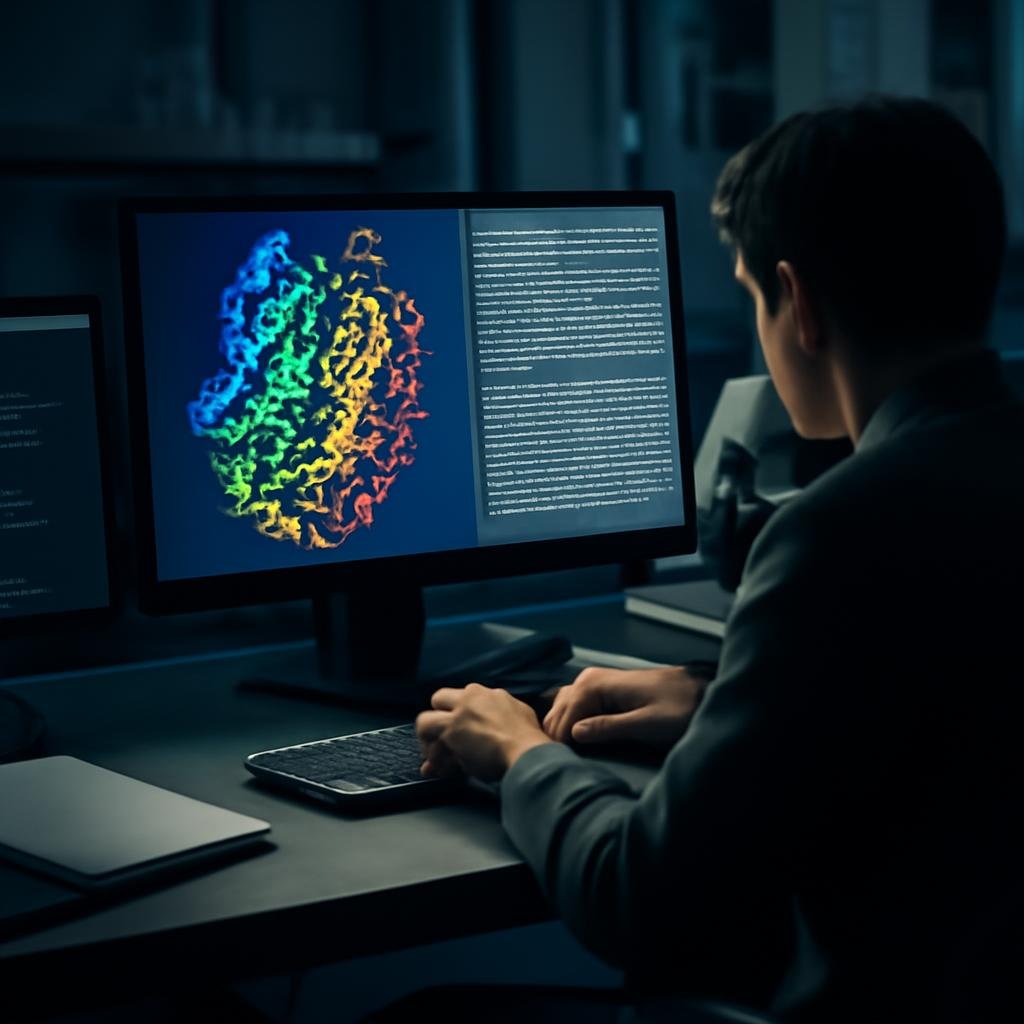
In a groundbreaking study published in the *Proceedings of the National Academy of Sciences*, researchers from Technion and Tel Aviv University introduced BetaDescribe, a novel AI-driven system capable of translating complex protein sequences into coherent natural-language descriptions. This advancement marks a pivotal step in biomedical research, as it could fundamentally enhance our understanding of protein functionalities, which in turn plays a critical role in fields such as drug development and material design.
The study highlights that BetaDescribe utilizes sophisticated algorithms to interpret the intricate language of protein sequences, which are comprised of a sequence of amino acids. Traditionally, understanding these sequences has been a monumental challenge due to their complexity and variability. With BetaDescribe, researchers aim to bridge this gap by rendering protein data into a language that is more accessible to scientists, enabling them to grasp protein functions more easily. This clarity could accelerate the identification of novel drug targets and improve the design of innovative materials.
One of the most promising implications of this development is its potential to streamline the early stages of drug development. By aiding in the identification of protein functions — especially those that are currently unknown — BetaDescribe may lead to faster and more targeted approaches in pharmaceutical research. Moreover, this AI tool can assist in deciphering the roles of proteins in various biological processes, thus facilitating a deeper understanding of disease mechanisms and therapeutic targets.
In the context of increasing interest in biotechnology and personalized medicine, tools like BetaDescribe could become indispensable. This technology not only advances scientific inquiry but also reshapes the landscape of biomedical research, fostering collaboration among researchers by providing a common framework for discussing protein functions. As the scientific community grapples with the challenges of big data in biology, innovations such as this AI system could be the key to unlocking new discoveries.
In conclusion, the introduction of BetaDescribe exemplifies how AI can enhance traditional scientific methodologies, pushing the boundaries of what is achievable in research and development. This represents an exciting frontier in both understanding life at a molecular level and applying that understanding in practical, transformative ways.
Was this article helpful?