
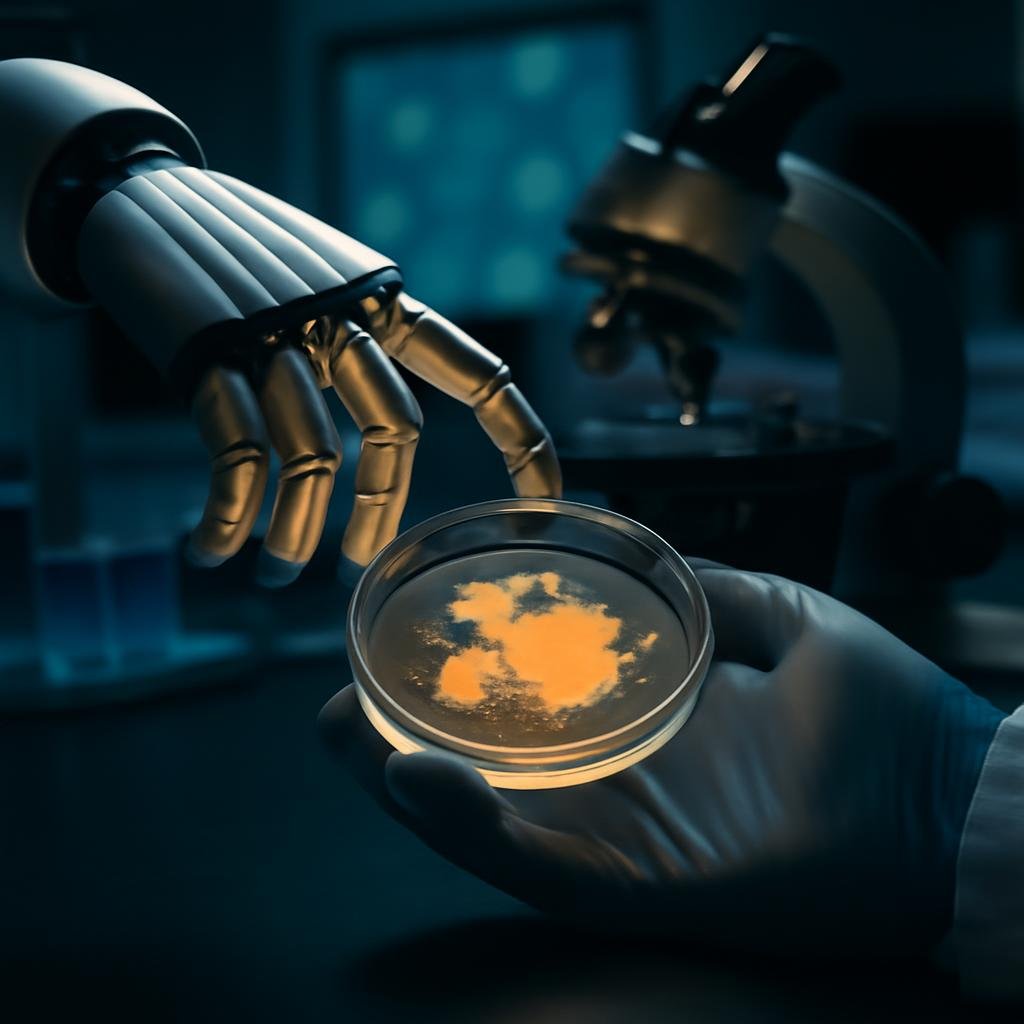
In a groundbreaking development reported on July 1, 2026, scientists have achieved a remarkable feat by creating a synthetic cell capable of growing and dividing. This innovation, detailed in Quanta Magazine, represents a significant step toward the goal of developing artificial life forms from nonliving materials. The research illustrates an expansion in the field of synthetic biology, where the boundaries of life and nonlife are increasingly blurred.
The synthetic cell, crafted from nonliving components, showcases properties that are closer to biological cells than ever before. Scientists have not only managed to induce growth but have also facilitated the cell's division, a critical feature of living organisms. This achievement provides robust proof of concept that life-like behaviors can be synthesized in the lab. The researchers involved are paving the way for further explorations into the bioengineering of cells, which could revolutionize various scientific fields, including medicine and environmental science.
What sets this study apart is the combination of lifelike functionalities that were previously unattainable in synthetic cells. The development of a growing and dividing cell opens numerous possibilities for practical applications. For example, these engineered cells could be used to produce pharmaceuticals, degrade environmental pollutants, or act as biosensors that detect specific pathogens in the environment.
Importantly, this milestone has broader implications about the understanding of what constitutes life. The research raises philosophical questions about the nature of living and nonliving entities, while also prompting discussions on the ethical considerations surrounding synthetic biology. As we advance in creating synthetic life, the potential risks and benefits must be carefully weighed.
In conclusion, the success in developing a synthetic cell that can grow and divide is a testament to the evolving capabilities within artificial biology and synthetic life sciences. This accomplishment not only signifies a technical achievement but also heralds profound future implications for science and technology.
If you find this topic intriguing, consider exploring more about synthetic biology and its potential impacts on your daily life.
Was this article helpful?