
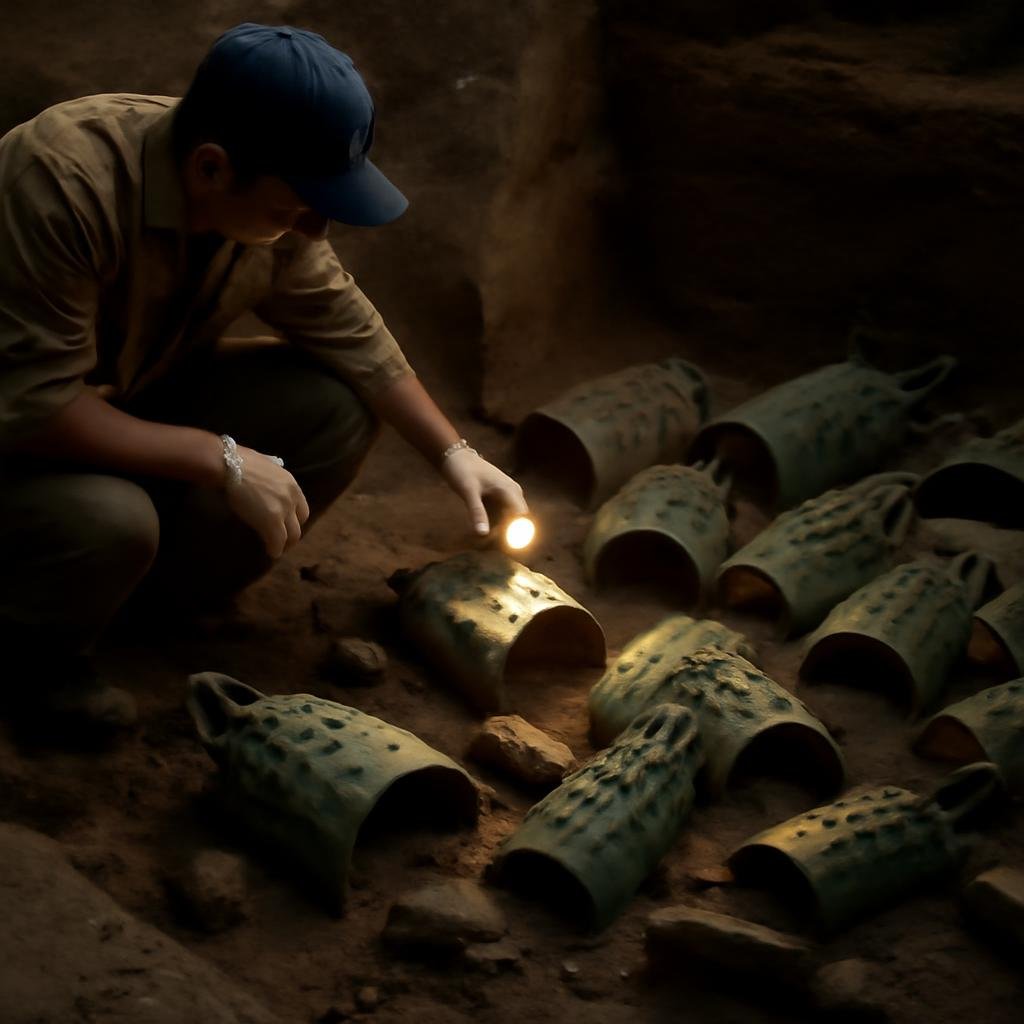
In a remarkable archaeological find, researchers have opened the tomb of an ancient Chinese lord, dating back 2,600 years, revealing a peculiar arrangement of bronze bells that suggests a ritual practice of deactivation. The discovery was reported on July 5, 2026, and has drawn significant attention for its implications on understanding ancient cultural rituals.
Upon excavation, the tomb revealed that the bronze bells, once used potentially in ceremonial practices, were not simply left undisturbed; instead, they were found scattered, with their wooden hangings broken. This arrangement indicates that the family of the tomb's owner might have actively chosen to deactivate the bells, symbolizing a conscious decision to sever their connection to the deceased and the powers those objects might have represented.
The conduct of such a ritual raises questions about the beliefs and customs regarding death and the afterlife in ancient Chinese society. While it is not uncommon to find artifacts in burial sites, the choice to deactivate such significant items suggests a more nuanced understanding of the relationship between the living and the dead, one where the utility and symbolism of objects evolve after the owner's passing.
Further exploration of this tomb and others like it could illuminate the complex interplay of artifacts, familial duty, and ritual practice in Chinese history, enriching our comprehension of social structures and beliefs during that era. As archaeological methods advance, similar sites may provide more insight into the funerary customs and the ideological landscape of ancient civilizations.
This discovery aligns with ongoing efforts by archaeologists to preserve and analyze ancient history, unraveling layers of cultural significance tied to burial practices. The findings highlight the importance of archaeological work in shedding light on the past, allowing modern scholars to learn about ancient rituals that shaped societies long ago.
For those interested in the intersections of archaeology and history, this story serves as a compelling reminder of how the artifacts of the past can speak volumes about societal values and beliefs.
Was this article helpful?