
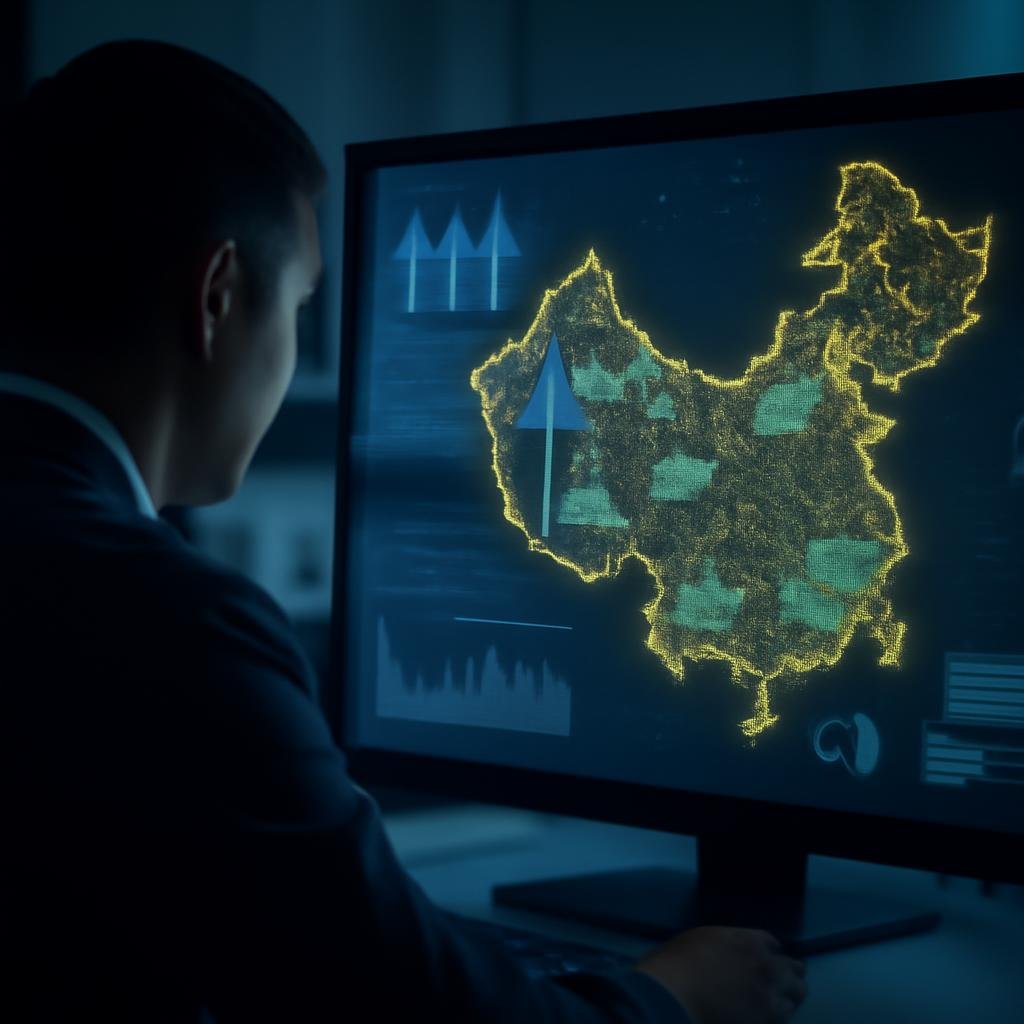
In a significant technological advancement, China has employed artificial intelligence to create a comprehensive map of its renewable energy infrastructure, which includes a staggering 400,000 solar and wind sites. This achievement, reported on May 22, 2026, marks a pivotal moment in the application of AI technology in energy management and environmental sustainability.
The AI-driven mapping project serves not only as a national inventory but also as a strategic tool that can drive policy decisions, enhance energy efficiency, and facilitate investments in renewable energy sectors. By utilizing AI's ability to process vast amounts of data quickly and accurately, China now has a robust asset management framework that can optimize energy distribution while monitoring grid performance in real-time. This capability is unparalleled globally, showcasing China as a leader in harnessing technology to meet its energy needs.
The implications of this development extend beyond China's borders. Other nations can look to this model as a potential blueprint for their own renewable energy strategies. With climate change being one of the most pressing issues of our time, a clear understanding of energy resources is critical for effective policy-making. For instance, other countries can adopt similar AI technologies to build comprehensive datasets that not only enhance transparency but also foster investment and innovation in clean energy solutions.
Furthermore, this move underscores the growing importance of AI in transforming industries. The capability to integrate and analyze data from thousands of renewable energy sites will not only minimize costs but also create more efficient energy sourcing solutions. It represents a shift towards a more data-driven approach in energy management, where decisions are guided by analytics rather than intuition alone.
As AI technology continues to evolve, it may well become integral in shaping future energy policies worldwide. Countries and companies will need to prioritize investment in such advanced technologies to maintain competitiveness in the rapidly evolving global energy landscape.
In conclusion, China's breakthrough in mapping its renewable energy grid using AI is a groundbreaking achievement that other nations should pay attention to as they work towards more sustainable energy solutions and policies.
For further insights, the original announcement can be accessed here: AI Energy Grid Mapping by China.
Was this article helpful?