
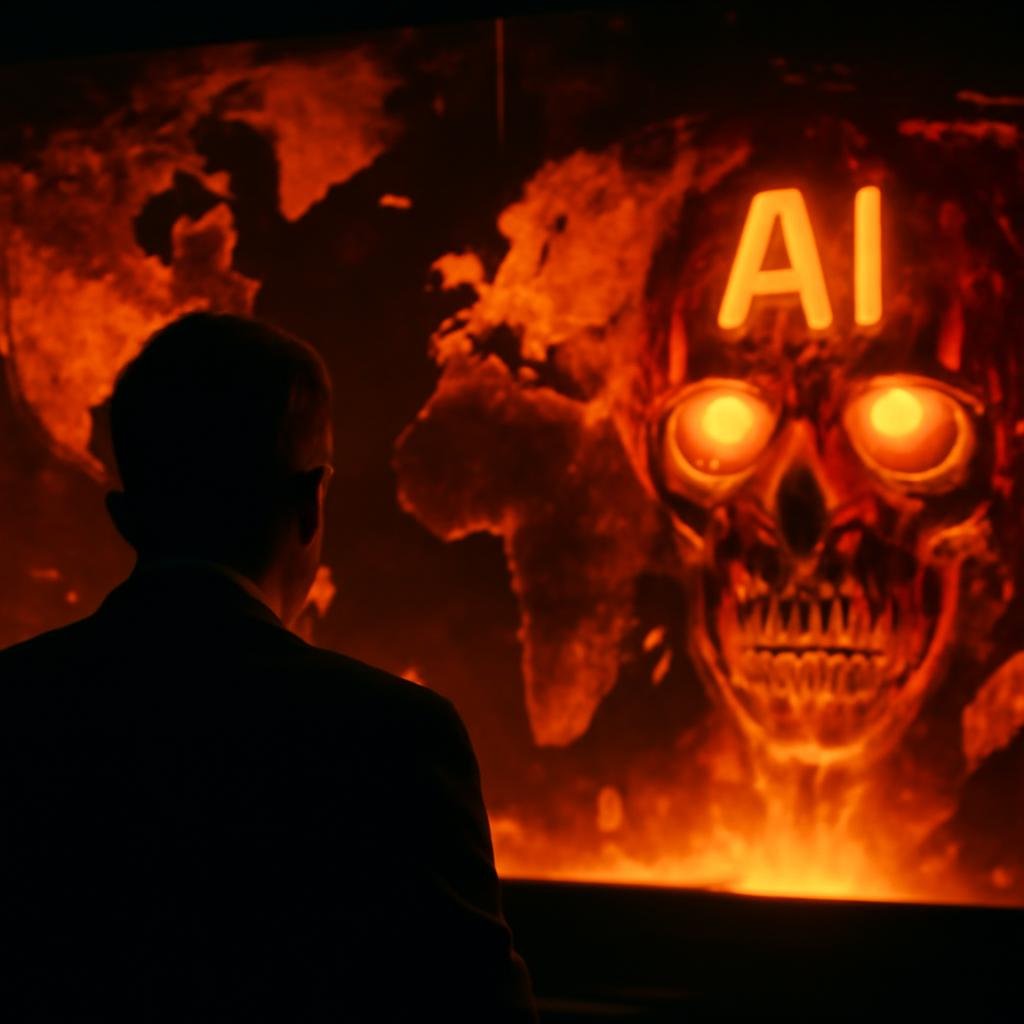
The discourse surrounding artificial intelligence (AI) has taken a stark turn with prominent voices predicting an impending "AI doomsday." In a recent article published in *Foreign Policy*, the author highlights an increasing probability of catastrophic outcomes arising from an AI collapse. This concern is not limited to technological failures but extends to the geopolitical landscape, particularly in volatile regions like the Middle East.
The commentary delves into how the intertwining of AI technology with critical national and global frameworks poses substantial risks. As AI systems become integral to military, economic, and social structures, their failure could trigger not only domestic disruptions but also international crises. The implications of this are profound, especially in contexts where existing tensions, such as the Israeli-Palestinian conflict, may be exacerbated by automated decision-making processes that lack human empathy and understanding.
AI's growing role in decision-making has already shown to privilege efficiency over ethical considerations, a fact that could lead to destabilizing actions in conflict situations. The stakes are notably high, as the decisions made by AI systems could potentially escalate military actions or disregard humanitarian concerns. This brings forward crucial questions: How do we ensure these systems are safe and beneficial? What regulatory frameworks need to exist to mitigate risks?
Moreover, the text raises concerns about the potential for an arms race fueled by advancements in AI, where nations prioritize rapid technological escalation over collaborative safety measures. This scenario echoes historical precedents where technological advancements have led to increased geopolitical tensions, prompting urgent calls for international treaties and cooperative governance.
As the AI landscape evolves, it becomes essential for policymakers, technologists, and society at large to engage in thorough discussions about risk management and ethical guidelines for AI deployment. This could involve regular assessments, transparency around AI capabilities, and a robust dialogue about societal impacts. Without these measures, the prospect of an AI-related disaster looms larger, changing the way we interact with technology and one another.
In conclusion, while AI holds transformative potential, the risks accompanying its unchecked expansion are significant. As discussions around AI governance intensify, understanding these dynamics will be crucial for navigating the future safely.
For a deeper dive into these issues, check the article on AI doomsday predictions on Foreign Policy.
Source: Foreign Policy
Was this article helpful?