
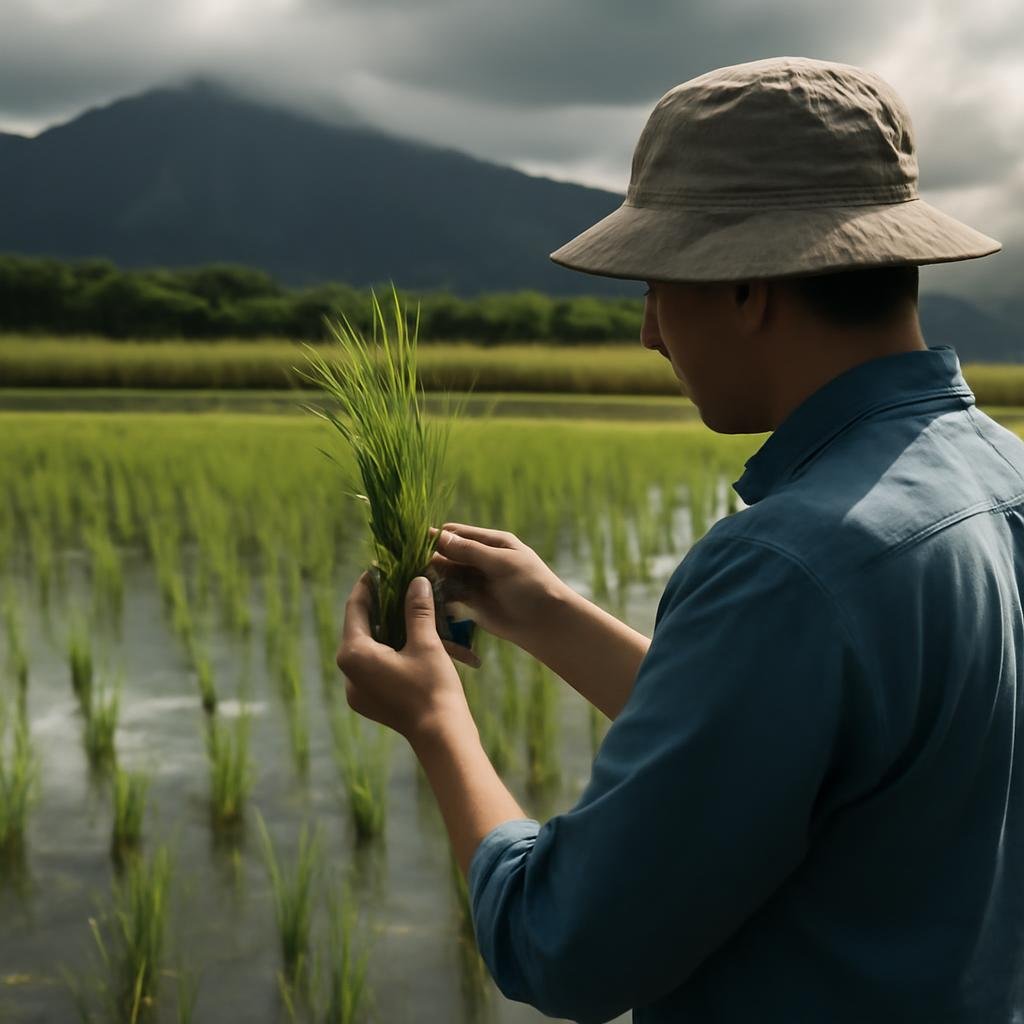
In a significant development for food security, researchers have successfully cultivated premium Japanese rice cultivars on Kauaʻi, Hawaiʻi, utilizing a water-saving, upland farming technique. This groundbreaking achievement was reported on July 6, 2026, by an international team focused on reviving rice farming in a region where it has declined due to various environmental challenges. Remarkably, the rice plants matured approximately one month earlier than their equivalent in Japan and produced yields comparable to those traditionally grown in Japanese upland rice systems, showcasing both superior grain quality and appearance.
The innovative upland cultivation method employed by the researchers minimizes water use, which is particularly critical given the ongoing challenges of climate change and water scarcity affecting agricultural practices worldwide. The success of these Japanese varieties, which have been adapted to suit the local conditions in Hawaiʻi, could serve as a model for enhancing food sustainability not just in Hawaiʻi but potentially in other regions facing similar agricultural hurdles.
This project comes in response to increasing concerns about food security, especially in island regions reliant on imported rice. Food import dependency poses risks, particularly in times of crisis or natural disasters. By establishing a resilient local rice production system, Hawaiʻi could improve its food sovereignty and provide consistent access to this staple food for its residents.
The implications of this research extend beyond just rice cultivation. It signals a potential shift towards more sustainable agricultural practices and highlights the importance of leveraging diverse crop varieties to adapt to local environments. Furthermore, if successful at scale, this initiative could encourage further investment in local agriculture, stimulate economic activity, and reduce carbon footprints associated with transporting food over long distances.
As climate challenges continue to evolve, this experimental rice farming could pave the way for similar initiatives aimed at other crops, enhancing regional self-sufficiency and adapting to changing environmental conditions.
Was this article helpful?