
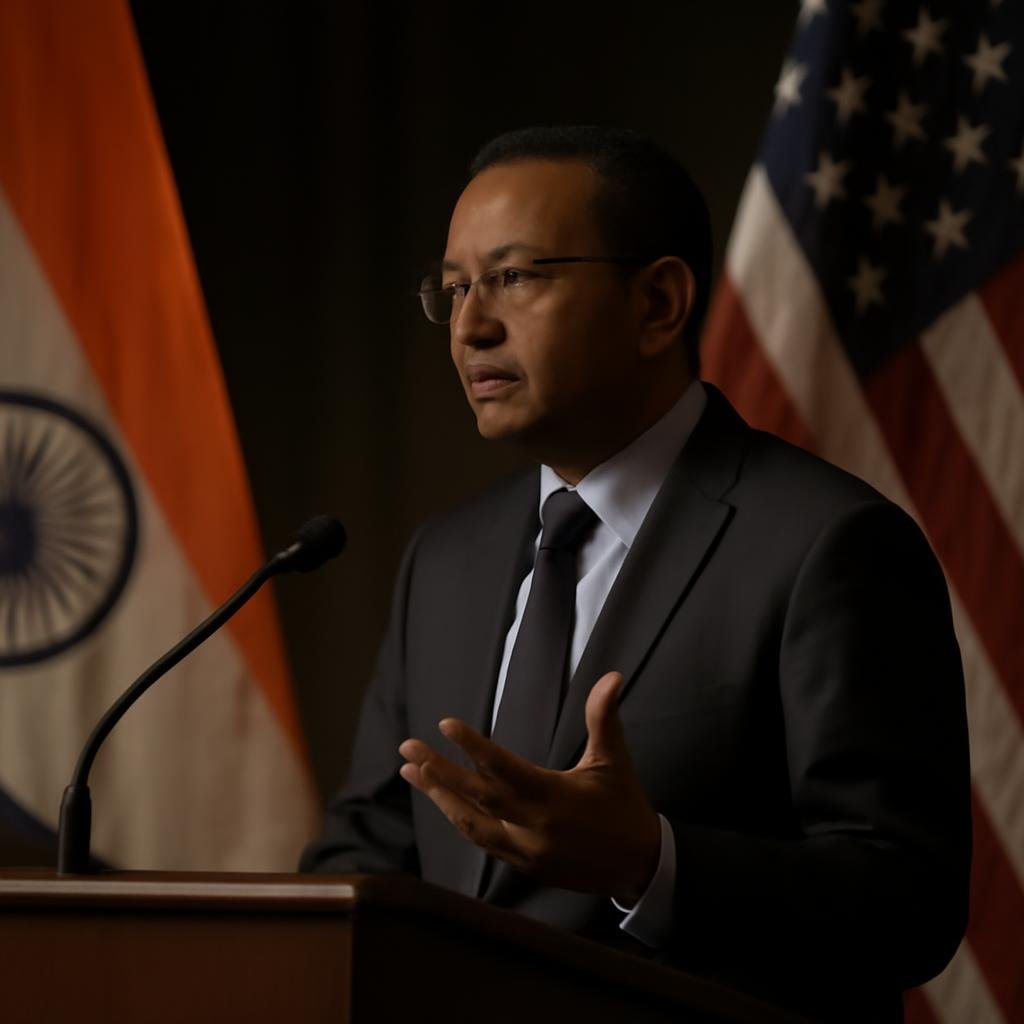
In a recent interview, India's ambassador to Washington clarified that the "Make in India" initiative will not conflict with the U.S. policy of "America First." This statement comes as part of ongoing discussions concerning trade relations between the two nations. The ambassador underscored that both initiatives can coexist without competition, focusing instead on collaboration and shared economic benefits.
The backdrop of this statement highlights a period of increased scrutiny regarding global supply chains, particularly in the context of U.S.-India relations. The Indian government has aggressively promoted the "Make in India" initiative, launched in 2014, with the intention of boosting domestic manufacturing and attracting foreign direct investment. This push aligns with India's broader goals of sustaining economic growth, creating jobs, and enhancing exports.
Conversely, the "America First" policy, introduced during the Trump administration, prioritized domestic economic interests, often leading to apprehensions in foreign partnerships. With both countries possessing strengths in technology, manufacturing, and innovation, the dialogue surrounding these policies is increasingly relevant.
The ambassador asserted that partnerships can lead to win-win outcomes. For instance, U.S. companies looking to diversify their supply chains may find opportunities within India's robust manufacturing sector. This could potentially stabilize costs and logistics for American firms, while providing India with an influx of investment and technology transfer.
While some critics argue that these policies may still create friction in areas like labor standards and environmental regulations, the ambassador remained optimistic about the cooperative spirit in which both countries can advance mutual economic interests. As India continues to position itself as a global manufacturing hub, the results of these diplomatic efforts remain to be seen, particularly in sectors like defense, pharmaceuticals, and information technology.
In summary, the assertion that "Make in India" does not oppose "America First" signals a strategic pivot towards building synergistic relations rather than confrontational stances. As global markets evolve, the emphasis on cooperative ties suggests significant opportunities ahead for both nations.
Was this article helpful?