
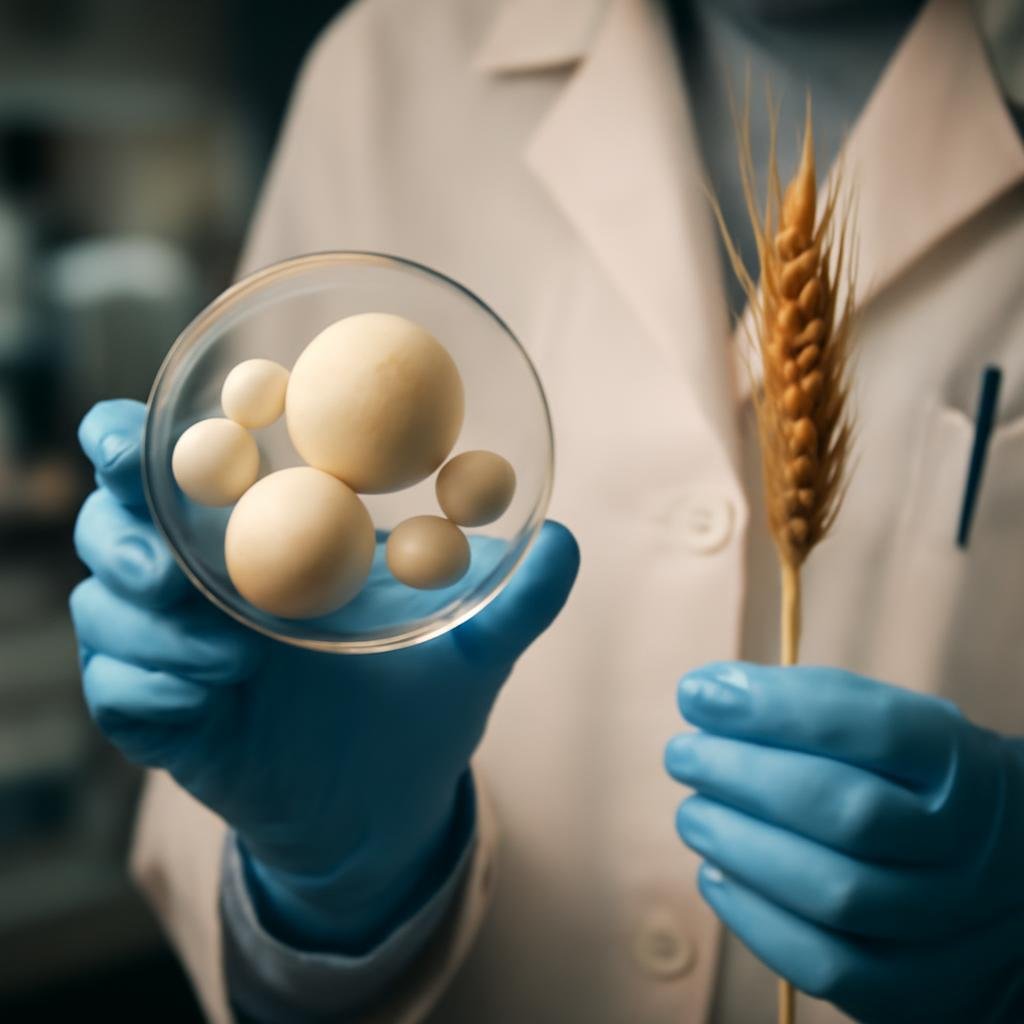
On July 3, 2026, a team of scientists announced a significant advancement in biological engineering, having successfully developed a new strain of wheat that produces supersized starch granules. This innovation has far-reaching implications for both diet and various industrial applications, positioning itself as a potential game-changer in the agricultural sector.
The researchers' work focuses on enhancing the size of starch granules found within wheat grains. Traditionally, starch granules in wheat are relatively small, limiting their utility in food and non-food applications. By genetically modifying the wheat, the scientists were able to increase the size of these granules significantly. This breakthrough not only offers potential benefits for improving the nutritional quality of food but also presents opportunities for advancements in the manufacturing sector. For example, the larger starch particles could enhance the thickening properties in food products, and their modified structure may allow for better performance in biodegradable plastics and other materials.
The implications of this research extend beyond basic dietary considerations. With the global demand for sustainable products on the rise, the development of this giant wheat opens up options for more eco-friendly manufacturing processes. Larger starch granules may facilitate the production of materials that are more readily biodegradable, offering a counterpoint to traditional plastics and other synthetic materials that contribute to environmental degradation.
Moreover, this innovation reflects the growing intersection of genetics and agriculture, highlighting the role of biotechnology in addressing modern challenges such as food security and sustainability. As scientists continue to explore the potential uses of genetically modified organisms (GMOs), this advancement may catalyze further research aimed at optimizing crops for various industrial uses.
In conclusion, the development of giant wheat starch granules is a notable leap forward in the field of biological engineering. It promises to not only enhance dietary options but also provides an essential step towards sustainable industrial practices. As this research progresses, it will be crucial to monitor its impact on both the agricultural landscape and consumer markets.
Was this article helpful?