
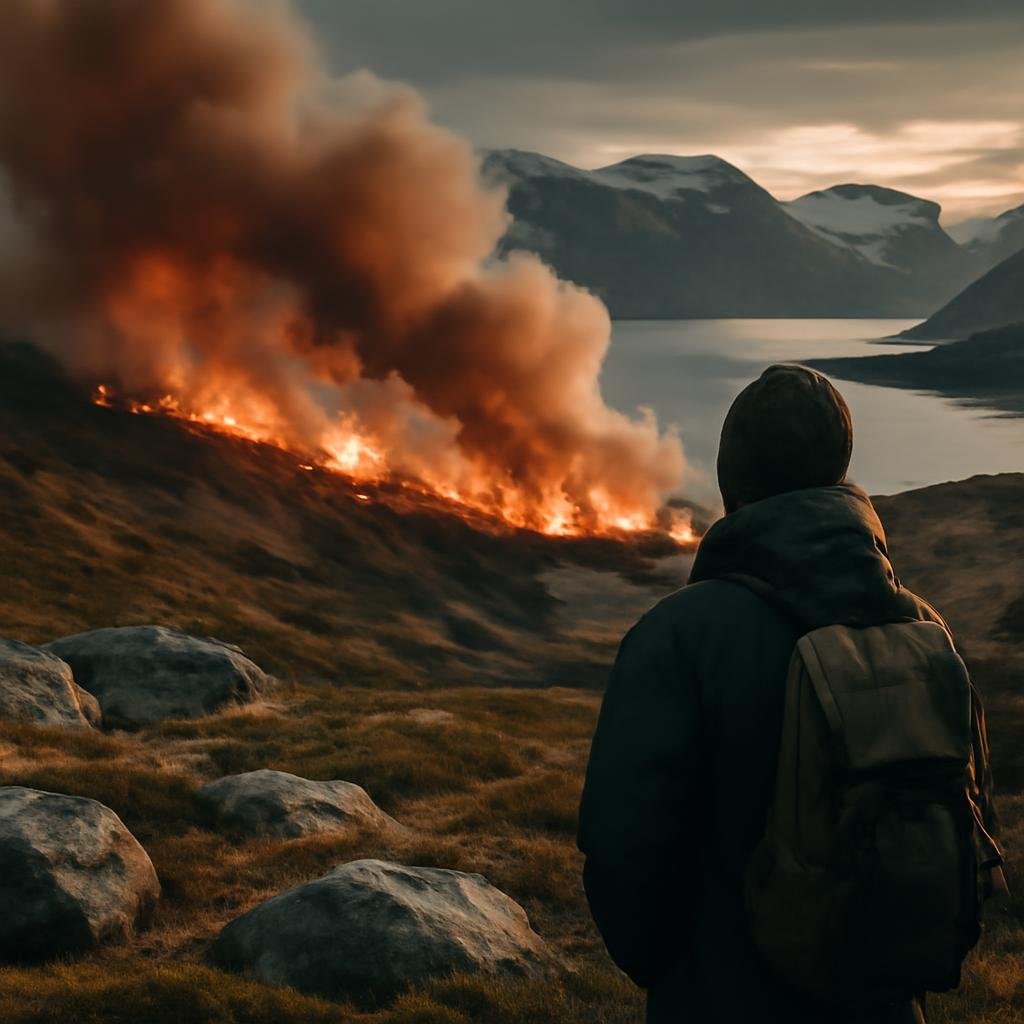
Recent years of relative calm have given way to a resurgence of wildfires in western Greenland, leading local communities to navigate the challenges posed by these increasingly frequent events. Wildfires, which have become a notable concern globally due to their links with climate change, have prompted Greenland residents to rethink their environments and strategies for safety and resilience.
In the past, wildfires were rare occurrences in this icy landscape; however, recent trends indicate a shift. The return of wildfires means communities must adapt to new realities, learning not only to prepare but also to live with the unpredictability of nature. Residents have emphasized the importance of sharing knowledge and fostering community resilience—as these efforts become essential due to the changing climate. Many locals have expressed that although the idea of living alongside wildfires is daunting, they have turned to each other for advice on preparedness and recovery.
This adaptation reflects a broader narrative emerging across the globe, where communities are increasingly required to confront natural disasters that were once seen as unusual. Fire management systems have gained importance, with residents implementing proactive measures like controlled burns and creating defensible spaces around homes to minimize fire risk. People have begun sharing strategies about building materials, landscaping choices, and community collaboration that can collectively mitigate fire threats.
This proactive approach is vital as climate scientists predict worsening conditions will likely continue to increase the prevalence of wildfires in various regions, including areas not typically associated with such events. Therefore, as Greenland enters a new paradigm of wildfire management, it serves as a poignant example of how human beings can adapt to changing environmental realities. The hope is that by sharing experiences and lessons, communities not only survive but also thrive amidst challenges.
In conclusion, the experiences of Greenland residents underscore a significant shift in understanding and addressing the threat of wildfires. As localizations and preparations evolve, they exemplify resilience and cooperation in the face of climate change-induced risks.
Was this article helpful?