
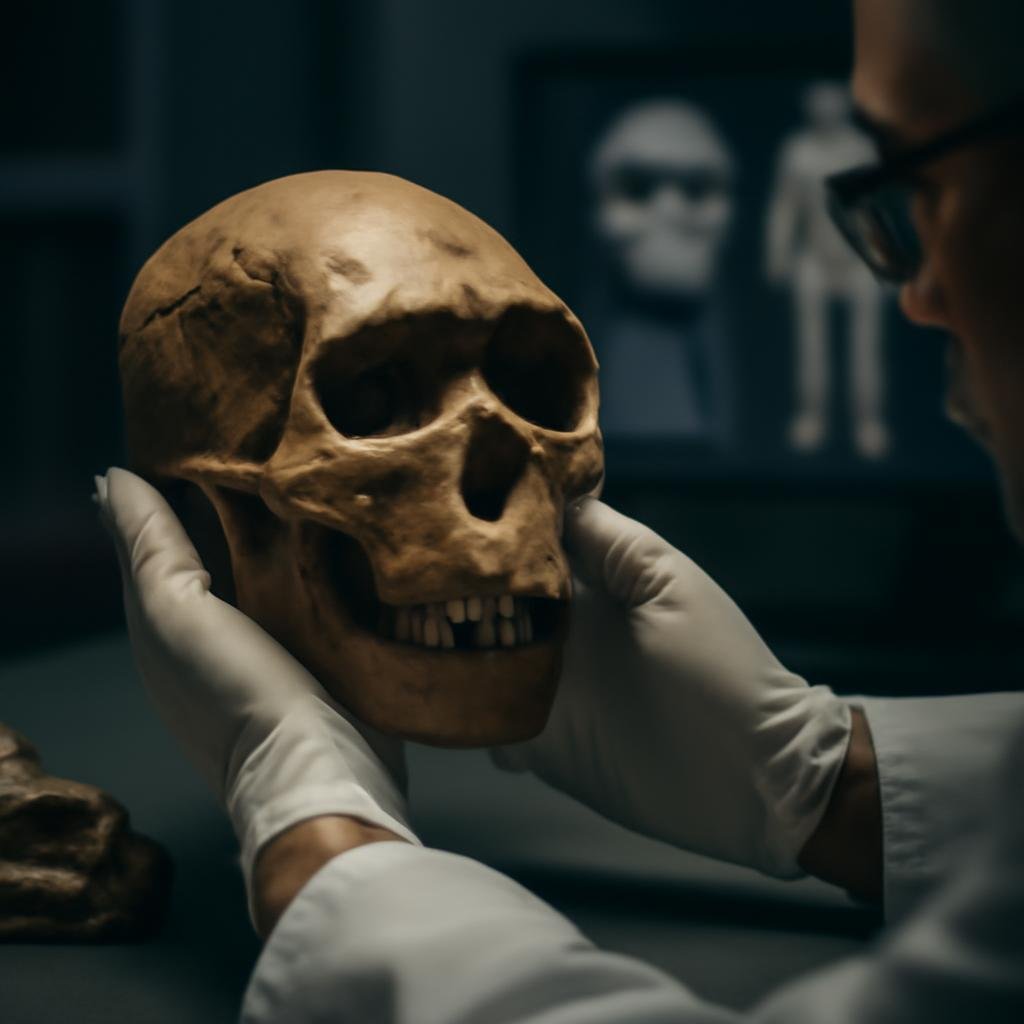
In a fascinating development in the study of human evolution, research unveiled on July 3, 2026, indicates that the extinct species Homo floresiensis, often referred to as 'the Hobbit' due to its small stature, may have played a different role in its ecosystem than previously thought. Rather than being skilled hunters or fire users, these early humans appear to have relied more on scavenging, according to new findings based on an analysis of fossil animal bones.
The analysis involved examining remains believed to have been part of the diet of Homo floresiensis, including dwarf elephants. These fossils provide critical insight into the dietary habits of this unique species. The bones revealed no evidence of butchery activities associated with hunting, indicating that Homo floresiensis might have foraged for leftovers rather than actively pursuing prey. This challenges long-held perceptions of the species as a primitive hunter, suggesting instead a more opportunistic feeding strategy.
Homo floresiensis lived approximately from 100,000 to 50,000 years ago on the Indonesian island of Flores. Its small size, thought to be an adaptation to the island’s ecological factors, has led scientists to consider various hypotheses about its origin and lifestyle. Previous arguments suggested potential hunting ability, but this recent evidence firmly shifts the narrative towards a scavenging behaviour, further deepening the mystery surrounding its ancestry and lifestyle choices.
This research not only reshapes our understanding of Homo floresiensis but also contributes significantly to the broader discourse on human adaptation and survival strategies in varying environments. The implications of scavenging over hunting could inform how we perceive the social structures and daily lives of these early humans, hinting at a reliance on communal resource sharing and possibly even tool use in processing scavenged remains.
In conclusion, this study underscores the significant role of fossil analysis in piecing together the life and habits of ancient human relatives. As more discoveries are made, researchers are hopeful that they can shed light on the complexities of ancient human behaviours and societal structures, leading to a more nuanced understanding of our evolutionary history.
Was this article helpful?