
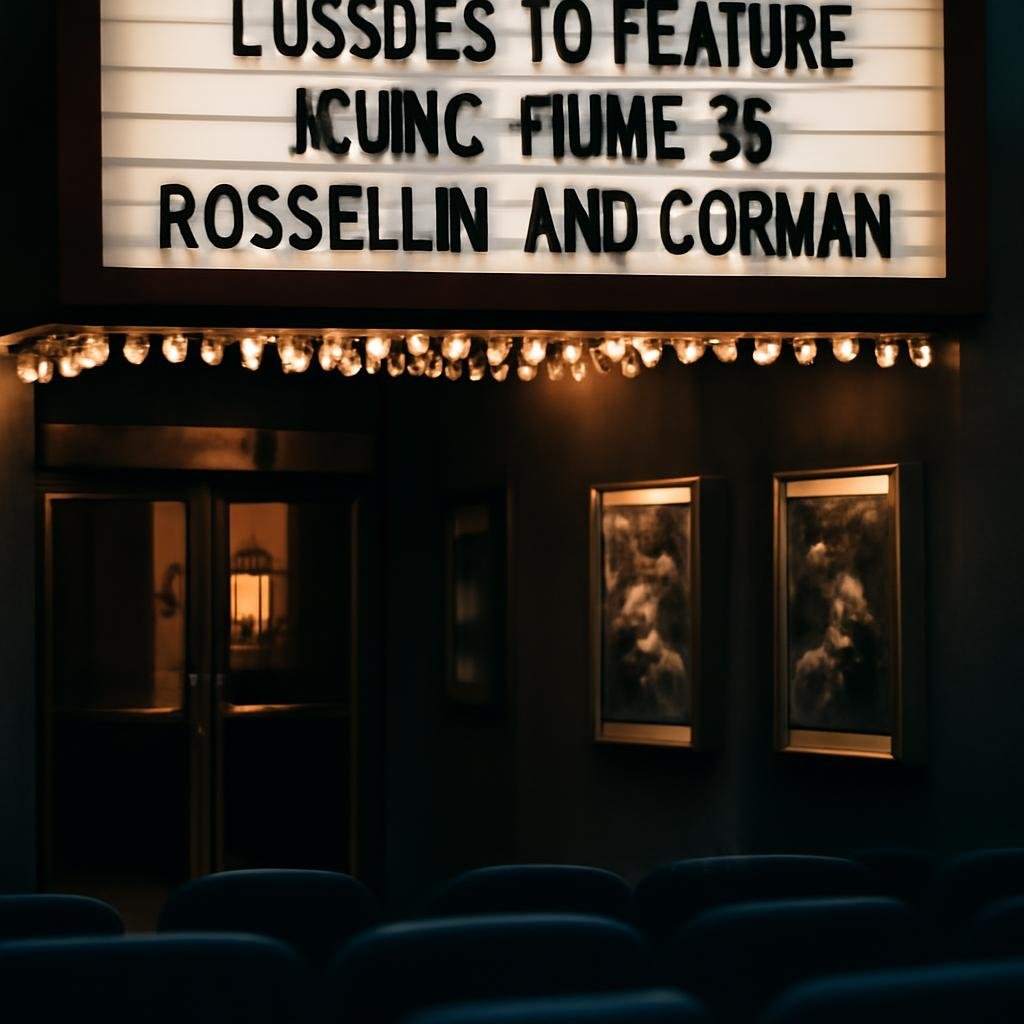
The Venice Film Festival is set to honor classic cinema in its Venice Classics section by featuring three notable films: Roberto Rossellini's 'Journey to Italy,' Roger Corman's 'The Wild Angels,' and Dev Benegal's 'English, August.' This selection highlights significant cultural and cinematic milestones, providing audiences the opportunity to revisit or discover these influential works. The festival is scheduled to take place in September 2026, maintaining its reputation for celebrating stalwarts of film history.
'Journey to Italy,' released in 1954, is a pivotal film in Rossellini's oeuvre, marking a departure from traditional narrative forms in cinema. It depicts the journey of a couple navigating their relationship amidst the serene yet turbulent backdrop of Italy. The film is renowned for its rich exploration of existential themes, as well as its stunning cinematography, which captures the beauty of the Italian landscape, making it a poignant piece worthy of re-examination in today's film discourse.
On the other hand, Roger Corman, often referred to as the "king of B-movies," directed 'The Wild Angels' in 1966. This film is a fascinating exploration of the counterculture of the 1960s in America, focusing on the lives of motorcycle gangs and their rebellion against societal norms. Corman's ability to blend social commentary with entertainment has rendered this film a cult classic. Its inclusion in Venice Classics not only recognizes its cultural significance but also its impact on the exploitation and independent film movements.
Lastly, Dev Benegal's 'English, August,' released in 1994, is a well-regarded film in Indian cinema that offers a fresh viewpoint on cultural clashes between tradition and modernity through the eyes of its protagonist, who is a young government officer navigating life in a small town. This film is notable for its humor and acute observations, resonating with audiences beyond its Indian context.
The showcasing of these films is a vital aspect of the Venice Film Festival's programming, as it aims to encourage dialogue around classic cinema while celebrating its enduring relevance in contemporary film culture. For cinema enthusiasts and new audiences alike, this festival offers a unique chance to engage with these timeless narratives that have shaped the landscape of film across generations.
As the festival approaches, it could be a great opportunity for film lovers to explore these classics anew, whether through in-person screenings or discussions that could deepen understanding of the filmmaking techniques and cultural contexts involved.